
by Lara
What if improving your English could feel less like studying and more like getting lost in a good book?
Students are often familiar with the recommendation to watch movies, listen to music, or follow podcasts in English to improve their skills, and these are excellent tools. However, as a teacher, I’ve noticed that literature is often overlooked. Reading a book requires more focus and time than scrolling through videos or songs, but it also provides a depth of learning that is hard to match.
Whether it’s a short story, a novel, a poem, or a play, literature can be one of the most effective ways to improve your English skills while also making learning an enjoyable process.
So, why is literature such a powerful tool for learning English? Let’s take a closer look.
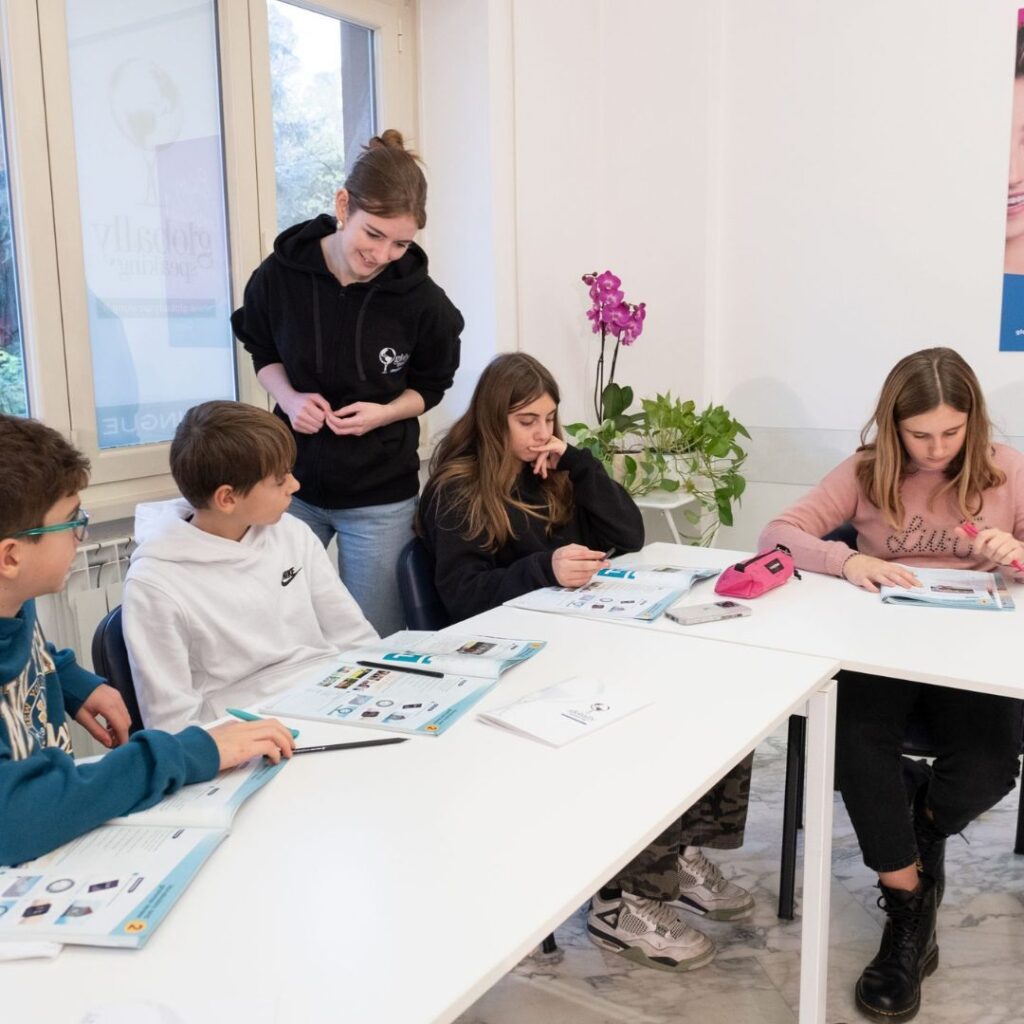
One of the biggest challenges of learning English is remembering new words. While textbooks and vocabulary lists are helpful, they can often be easily forgotten without constant revision. However, in a story, words appear in meaningful situations. Learners are able to see how they are used, the emotions that they carry, and how they connect to characters and events.
As research shows, reading English literature written for native speakers helps learners become more familiar with the types of languages they will encounter in real-life situations.This makes discovering and remembering new vocabulary much easier. For example, in one lesson where I read an excerpt of Pride and Prejudice by Jane Austen with a student, he learned and absorbed more new vocabulary in a single class than in weeks of traditional practice. The story gave the words life, and that made them unforgettable.
Textbooks do a great job at explaining grammar rules, but literature shows us how they work in real life. Reading exposes us to different tenses, sentence structures, and writing styles naturally. Over time, without even realizing it, readers develop an instinct for what “sounds right”, making grammar feel practical, not just theoretical.
Literature challenges us to go beyond word-for-word translation. It encourages to guess from context, interpret meaning, and think critically about characters, themes, and hidden messages. These are the same skills needed in our everyday conversations, where people rarely speak in perfect, literal sentences.
On top of helping with grammar and vocabulary, literature also encourages us to explore different cultures, time periods, and viewpoints. Every story opens a door to a new world. This not only improves English but also builds on empathy and curiosity, which are skills that make learning far more meaningful.
Literature doesn’t just improve reading and comprehension skills. By turning the reading experience into conversations, debates, or even creative writing exercises where learners retell events, share opinions, and borrow phrases from what they’ve read, students can naturally strengthen their speaking and writing skills.
A good story will make you forget that you are studying. It will make you want to know what happens next, keeping you engaged and motivated. That excitement turns learning into something enjoyable rather than forced.
Interested in trying reading as a way to improve your English? Here are some tips to help you get the most out of every text:
Literature is much more than just entertainment; it is a powerful learning tool. Every page helps us expand our vocabulary, strengthen grammar, sharpen comprehension, and connect with culture. Most importantly, it makes learning English enjoyable and personal. And remember, you don’t have to choose alone. Teachers at our school are always happy to recommend books that match your level and interests. The right story could be the spark that makes your English truly come alive.

Via Prisciano, 42
tel. (+39) 06 35340346
06 64560338
mobile: (+39) 327 9703457
segreteria@globallyspeaking.it
P.I. 12415031009
Dal lunedì al venerdì: 9:00-19:00
Sabato: 9:00-13:00
Globally Speaking S.r.l. P.IVA 12415031009 | All Rights Reserved